Truman Doctrine: part of the Containment Policy, the US gives money to countries to fight communism, part of the US' Post WWII foreign policy
Containment Policy: keep communism from spreading, contain communism, expel communism out of foreign countries, part of the US' Post WWII foreign policy
Bay of Pigs Invasion (similarities to Invasion of Panama): US wanted to overthrow government in Panama and put in democracy, Cuba was invaded by exiles from Cuba to try to overthrow the government and US wanted to establish democracy
US Foreign Policy with Regard to Korea and Vietnam: contain communism so other countries don't fall to it (Containment Policy), give money to countries threatened by communism (Truman Doctrine), US and other top countries head the decisions of the U.N.
Intervention: US tries to overthrow communist governments, fight the wars of other countries that deal with communism, press democracy on other countries, help to push communist forces back when the communists invade a free country, influence other countries to get what the US wants
Cold War Development: mostly between Russia and the US, communism vs. democracy, the space race, development of nuclear weapons, and the Cuban Missile Crisis fueled the Cold War, when the USSR starts to become as advance as the US, the US becomes scared and feel threatened, the USSR's possession of nuclear weapons scares the US, the Us wants to stop the spread of communism
War Powers Act: the President can only go to war with Congress' permission, in Vietnam and Korea, the US was involved in these conflicts for years without declaring war
WWII Foreign Policy vs. Post WWII Foreign Policy: In WWII, the main goal for the US was to win the war at all costs and defeat the Nazis. In Post WWII, the main goal was to contain communism as stated in the Containment Policy, including, giving aid to countries threatened by communism (Truman Doctrine).
Limited War: when a country is involved in a conflict, but doesn't use all of its resources. Limited War Ex: Vietnam, Korea, Iraq, Afghanistan Total War: WWII
Examples of Containment In Europe: the US gave money to countries threatened by Soviet rule (Truman Doctrine), the US wanted to prevent the USSR's communist ways from spreading to other countries in Europe, East Germany was communist and West Germany was free, East Berlin was communist, West Berlin was free, France, Great Britain, and the US tried to keep communism from spreading from East Berlin and East Germany to West Berlin and West Germany
Main Points of the Division of Germany: Communist East Germany and East Berlin were ruled by the Soviet Union, Democratic West Berlin and West Germany were ruled by France, Great Britain, and the US, fencing, soldiers, and later on, the Berlin Wall separated the two sides, Berlin was in the middle of communist East Germany, Braidenburg Gate was the main passage way from East Germany to West Germany, was built by the Soviet Union
Douglass MacArthur Dismissal: MacArthur pushed the North Koreans back further than the original border, where he was supposed to push them back to, he didn't listen to the President, he made public statements against the president
Korean War Similarities with Persian Gulf War: both countries were invaded by other countries, North Korea invaded South Korea and Iraq invaded Kuwait, the US fought the wars of other countries, original borders between the Koreas and between Iraq and Kuwait needed to be reestablished
Nuclear Ban Test: countries containing known nuclear weapons agreed to sign a treaty not to test nuclear weapons, but some countries, like the US, still test nuclear weapons
Long Term Effect of Vietnam: the war divided America over which side people were on, this still influences how war is viewed today (Democrats and Republicans and hawks vs. doves), the war got rid of the draft, death, cancer and other illnesses from Agent Orange, Vietnamese migration to the US, brought down the Nixon administration
Peace Corps: a way to help third world countries, help build wells, schools, was a way for people to get out of the draft to Vietnam
End of Cold War (the event that marked it): the Fall of the Berlin Wall
Domino Theory: one nation falls to communism the next country will fall as well, caused a fear of communism and made this fear caused the US to get involved in wars against communism, other countries near communist countries were more at risk
Nixon's Detente: eased tensions between the US and the USSR, peaceful coexistence, Nixon and Brezhnev had multiple meetings and signed treaties to come to agreements and ease tensions.
Tuesday, May 17, 2011
Monday, May 16, 2011
Iraq vs. Vietnam
In the Vietnam War, the American troops were seen as the enemy, that the greedy Western ways would destroy the life and culture of Vietnam. People in Vietnam seemed happy to been under communist control instead of having the Americans help prevent the country from becoming communist. The Vietnamese purposely destroyed the United States embassy, stealing anything and everything, to show their dislike for the West. The media makes American soldiers seem like disgusting, drunk killers that pillage and plunder innocent villages. In the Iraq-Afghanistan War, soldiers are given an honorable welcome home, whether they walk out of a plane or are carried out in a flag-covered coffin. These men and women are seen as heroes for the huge sacrifice they have given for their country. Private businesses are generous with perks for those in the military, and being in the military is seen as a noble position. The media overflows with American pride for those fighting the wars in Iraq and Afghanistan.

Kennedy Tweets
Mr. President: John just sent me a note saying that he thinks there will be missiles on Cuba pointed to us! I hope he's wrong about this.
8/10/62 8:15 A.M.
Mr. President: Ken told the Senate that there is proof that the Soviets have missiles in Cuba, and he wants me to do something about it. I'll have to get to brainstorming.
8/31/62 3:24 P.M.
Mr. President: The Soviets are trying to flex their muscles. At the U.N. meeting, they said a war with Cuba was a war with them. We can take 'em any day.
9/11/62 5:43 P.M.
Mr. President: I sent the U2 out today. We'll see if we find these rumored missile sites. Got to go have lunch with Jackie.
10/14/62 12:33 P.M.
Mr. President: I found out that the U2 took pictures of missiles on Cuba pointed at us! I'm having a meeting about this in a little bit.
10/17/62 2:57 P.M.
Mr. President: Gromyko told me that the Soviet Union gave Cuba missiles just for Cuba's own self-defense. Like I'd believe that.
10/18/62 10:45 A.M.
Mr. President: I just finished up a meeting with the congressional leaders about the missiles in Cuba. Everyone showed support to stop this. Tonight, I'm going to give a speech on TV to the country about what's happening 90 miles south of us.
10/22/62 11:13 A.M.
Mr. President: I'm sending my little brother Bobby to talk some sense into the Soviets. Hope it works.
10/23/62 9:17 A.M.
Mr. President: Khrushchev and I have been sending letters of negotiation back and forth and we haven't reached an agreement. This is getting really frustrating. He better make a decision soon. He's cutting it real close to the deadline we agreed on.
10/27/62 11:02 P.M.
Mr. President: What a relief! Khrushchev finally agreed to remove the missiles as long as the US didn't invade Cuba anymore. It would have been a nuclear war had he waited any longer.
10/28/62 9:05 A.M.
"Where Is The Love?"
"Overseas, yeah, we try to stop terrorism
But we still got terrorists here livin'
In the USA, the big CIA fightin'
The Bloods and The Crips and the KKK"
"Where Is The Love?" By: The Black Eyed Peas
This song was released in 2003, the same year that US troops went to Iraq, and deals with the current issues of terrorism, especially 9/11, hate, and intolerance. The song talks about the terrorism that affected the US during 9/11 and the Iraqi War that followed, but also the terrorists that are on our own soil, such as the KKK. Hate and intolerance cause wars and kill many. The song asks listeners to focus on the injustice at home as well. These lyrics are similar to those of songs from the Vietnam Era because they talk about current issues of the time and have a call to action to do something about the problems the US faces. This song came out at the perfect time when Americans were upset with the tragedy of 9/11, just as songs of protest and peace were released when there was a great divide over the Vietnam War.
Thursday, April 21, 2011
MLK vs. Malcolm X
I do think that the methodologies of Martin Luther King, Jr. and Malcolm X were very different from each other. King used more civil, peaceful words and presented the Civil Rights Movement as a problem that is unfair and that affects the fellow man. He wanted this problem to be something that all races should want to help with. One race wasn’t accused of being the enemy, while the other was the victim. Malcolm X had an angrier tone in his words. He seemed to be quick to make assumptions about an entire race, which would make whites wan to turn away from what he had to say about the issue. In my opinion, he was very drastic with his approach, since it was directed at the community as a whole. Whites were made to look like the enemy and that they are fully responsible for the suffering of African Americans. I think that if one wants to address two parties, two races, or two groups, he or she should appeal to both sides in order to create interest and change. Martin Luther King, Jr. had the more effective method in accomplishing the goals of the Civil Rights Movement. I never learned about Malcolm X in lower grades of school, but in my classes the students learned about King every year. He is well remembered for his peaceful protests, which say a lot about his character, his supporters, and the change he wanted.
College Education Survey
Total
Race Total HS Grads Total College Grads
None of the participants identified themselves as Native American, Pacific Islander, or Other, so they were not represented in the results. Among all races, most of the participants' parents graduated from high school. During college is where a shift is seen between races. The White category has the most amount of college graduates out of all the races, with the Hispanic group coming in second. Almost all of the Asian parents that graduated from high school went on to college. Though, no one in the African American group graduated from college. Statistically, whites are the racial group that makes the most money, so college might have been more financially reasonable for them. The parents of whites were more likely to go to college than parents belonging to other races, so their children were expected to go to college as well. Minorities are more likely to come from lower income families and in lower communities higher education may not be valued or thought to be financially practical. Some groups may have decided to get their college degrees once they came to the States and saw all the opportunity that higher education provided.
Race Total HS Grads Total College Grads
W: 23 15
AA: 2 0
A: 5 4
H: 13 9
NA: 0 0
PI: 0 0
O: 0 0
None of the participants identified themselves as Native American, Pacific Islander, or Other, so they were not represented in the results. Among all races, most of the participants' parents graduated from high school. During college is where a shift is seen between races. The White category has the most amount of college graduates out of all the races, with the Hispanic group coming in second. Almost all of the Asian parents that graduated from high school went on to college. Though, no one in the African American group graduated from college. Statistically, whites are the racial group that makes the most money, so college might have been more financially reasonable for them. The parents of whites were more likely to go to college than parents belonging to other races, so their children were expected to go to college as well. Minorities are more likely to come from lower income families and in lower communities higher education may not be valued or thought to be financially practical. Some groups may have decided to get their college degrees once they came to the States and saw all the opportunity that higher education provided.
Tuesday, April 19, 2011
Jena Incident
To make this clear, I don't condone beating up anyone no matter what race he or she is. Whether those students actually beat the white student or not, they shouldn't be charged with attempted murder when no one knows their motives for hurting the other student. Most schools wouldn't take something a simple as a school fight and blow it out of proportion to make it into an attempted murder.There might have been some hidden motives for the prosecutor that changed the Jena Six. I imagine that the prosecutor was white, may have been racist, and wanted to see these boys go to jail. This reminds me of the Little Rock Nine incident during the Civil Rights Movement. In Little Rock, the nine students that were to attend Central High School to segregate the school were taunted and harassed by whites in the school and community. In Jena, the same thing is happened. Some people in the mostly white community were looking for an easy scapegoat to put the blame on. Though this time, the accused have a large group backing them up, unlike what happened with the Little Rock Nine. It is great to see that a new generation is taking a stand for what is right.
Monday, April 18, 2011
Meritocracy
I do believe that meritocracy is true. When people in society are taught that they are low class and uneducated, they tend to accept that because that's how everyone treats them. People in these categories might think that they are at a lower advantage for success because that's how they perceive themselves to be based on what they have been told. If that person is shown that there is a world beyond a poor, impoverished life, the person may work hard to achieve a better life. Of course, encouragement from family, friends, and school helps people to achieve their goals. It really all depends on the work a person puts in. A lower class person may think, "Hey, I don't want to be a statistic. I'm going to prove everyone wrong and make a better, happier life for myself." Many immigrants came to the United States with nothing, started businesses, and did very well for themselves. They were able to make that change because they saw what they wanted and went for it. Today, there are a lot more opportunities for minorities to go to college and get good jobs than there were in the past decades. In the end, hard work is rewarded.
Wednesday, April 6, 2011
Sexist Ads
 This ad shows that women only took care of the home and cooked because the woman in this ad is opening a bottle of ketchup. The ad is supposed to gear toward women who aren't strong enough to open a normal bottle of ketchup. The lady says, "You mean a woman can open it?", which implies that women were thought of by men to not be as strong as a man since the woman in the ad couldn't open the bottle before. I certainly know women that can open a tight ketchup bottle just as well as any man can and I know women who are quite strong, as well. Since the men were the ones that worked outside of the home in the 1950s and had the majority of the jobs in the workforce, they were the ones who came up with this advertisement. It was their idea that women were't as strong as men and by advertising a ketchup that is easier to open, their "little wives" can struggle less to make meatloaf and have it waiting for their husbands when they return home from work.
TV's Impact On Society
TV has had a huge impact on society, affecting the shoes we buy and the gum we chew to which news interpretation we hear and how the country is doing in the President's State of the Union speech. TV can be used for many positive implications such as asking for donations to help earthquake victims in Japan, but can help twist family values and what is acceptable in society. Media, such as music and TV, definitely affect the actions of teenagers. Commercials particularly focus on this age group because they are a large group of consumers in the United States. If a commercial shows a guy wearing the latest pair of Nikes and gets all the girls, teen boys would see that and think "maybe I'll be cooler if I get those shoes." Some teens watch "Jersey Shore" and begin to think that the behavior of the people on the show is acceptable, when truly a person wouldn't be able to keep a job if all he or she did was party. On the lighter side, TV can also show other teens that are volunteering to help others after a natural disaster hits. Seeing someone their age making a difference in his or her community, could prompt other teens to do the same. All in all, the messages advertisers and producers send to the public through TV can absolutely affect the opinions, actions, purchases of teens and other Americans.
Monday, April 4, 2011
Norman Rockwell Story
The town has come for a meeting about an important topic. Everyone in the town hall has agreed on a common decision. Then, one man, who felt he needed to stand up for what he thought was right, decided to make his voice heard. Most people would be afraid to go against the tide, but he wasn't. This painting embraces the American Spirit of Freedom of Speech. The American people are very blessed to be able to voice their opinions and speak their minds without the risk of persecution. In the end, the man was able to convince everyone with his thoughts and opinions. Sometimes it only takes one voice to make a difference.
Topic 10 Concept Guide
McCarthyism Impact on Society: Causes the US government to review its own employees, the 2nd Red Scare, paranoia that everyone is communist
Communist "Witch Hunt" and impact on those accused: People that were accused were put in jail, lost their careers, Hollywood became more conscious of what made it to the big screen
Space Race Impact on government policies: US put money into the education system to create better scientists, mathematicians, and engineers, money was put into the space program in the race to the moon
Cold War mind set for the United States Government and public: People were afraid of Communism coming to the US, money was put into the education system to focus on science to aid in the competition of the Space Race, money was put into the creation of a space program in the United States
Relationship of suburbs, automobiles, and roads: Roads and cars allowed people to be able to commute to the cities for work and live in the safer suburbs, this relationship encouraged more people to move from the cities to the suburbs, the wide use of cars influenced the creation of highways all over the country
Baby Boom: Soldiers came home from WWII and had families, the removal of social and economic restraints and the departure of 20 years of "tough times" were important conditions for the Baby Boom to happen, kids and teens became a target market in marketing as a result of the Bay Boom
Urban-Suburban Pattern: The city center is were the business district is and where low income families live, the next layer after the inner city is the middle income suburbs, and the farthest layer form the city center is where the high income suburbs are
GI Bill: Government aid for returning WWII vets that included college financial aid, loans to buy homes and businesses, and one year of unemployment pay
Expansion of the Middle Class (Why were things "affordable"): Soldiers returned and had families, moved to Suburbia, goods were made in the US, an economic boom occurred after WWII, cars were affordable and readily available, homes were made one way in the suburbs which made homes affordable
Friday, March 18, 2011
Casablanca Outline
I. Setting
1. 1940s, WWII
II. Introduction
A. Two German couriers were murdered in the Moroccan desert and Ugarte gets the letters of transit.
1. Rick (Humphrey Bogart) wants to go back to America.
2. German officials want Laszlo to stay in Casablanca since he is the leader of the rebellion against the Nazis.
3. The Germans want the person that killed the German couriers to be killed.
B. Ilsa and her husband, Victor Laszlo, arrive at Rick's restaurant.
1. Ilsa meets Rick again.
2. Ilsa and Rick were dating in Paris when the Germans took over France and while Victor was in a concentration camp.
3. Ilsa and Rick were about to leave Paris on a train together, but Ilsa backed out at the last minute. Victor was alive and escaped from the concentration camp.
III. Trouble With The Nazis
A. Rick has the letters of transit at his restaurant, which he got from Ugarte.
III. Trouble With The Nazis
A. Rick has the letters of transit at his restaurant, which he got from Ugarte.
1. Victor asks Rick for the letters of transit; he is willing to pay large sums of money for them. Victor is running from the Nazis and want to stop his work with the rebellion.
2. While Victor is at the cafe German officials sing the German National Anthem. Victor orders the restaurant band to play the French National Anthem, since Morocco was a French colony at that time. Everyone in the restaurant sings the French National Anthem and the German officials grow more wary of Victor because of his public demonstration.
3. The Nazis want to take Victor back to a concentration camp since he is spreading the word of the anti-Nazi rebellion.
4. Rick won't give Victor the letters of transit because of Ilsa. Ilsa didn't tell Victor that she was with Rick while she was still married to Victor. She thought Victor was dead.
IV. Rick and Ilsa
IV. Rick and Ilsa
D. Ilsa attempts to get the letters of transit.
1. While Victor goes to the underground rebellion meeting, Ilsa goes to see Rick.
2. Ilsa threatens to kill Rick with a gun if he doesn't give her the letters of transit so she and Victor can be safe and Victor can continue his work in America. Ilsa doesn't kill Rick because she still loves him.
3. Rick and Ilsa talk about the situation. Ilsa had to keep her marriage a secret to protect herself and Victor from the Nazis.
V. Conclusion
V. Conclusion
E. Germans are looking for Laszlo
1. Victor is under arrest and Rick and Ilsa agree to use the letters of transit to go together by plane to America.
2. Rick sets up a trap for Laszlo to get captured by the Germans. Rick calls the cops on Laszlo.
3. Rick is about to shoot Captain Renault, but the Captain lets Laszlo go free.
4. Victor and Ilsa used the letters of transit to go to America with the help of Rick.
5. The German official comes to make an arrest, but he is shot by Rick.
6. The film ends with the famous line, "Louis, I think this is the beginning of a beautiful friendship," as Captain Renault and Rick off together.
Thursday, March 17, 2011
Topic 9 Concept Guide
Role of Women during WWII: took over the jobs men had before the war, worked making weapons, as nurses, secretaries, chemists, and welders
Cause and Effect of the Use of the Atomic Bomb: to make Japan surrender, Japan surrendered after 2nd bombing, caused mass destruction, burns on skin, radiation poisoning, deformities, cancer, caused tensions in Cold War over nuclear weapons
US Foreign Policy Before, During, and After the War: Before WWII: the US was neutral, During: US helped Allies, After: US helps countries in need, supports allies, has a defensive approach toward enemies
Effect of the War on Europe: Europe lost many soldiers and lots of people in the Holocaust, Europe was in debt and in total destruction, Hitler came into power and had concentration camps
Effect of Pearl Harbor Attack: got the US into WWII, the US helped the Allies a lot in defeating Hitler, US ships got blown up, people on Pearl harbor were killed
Japanese Internment: Japanese-Americans were put into camps just because they were Japanese, during Korematsu v. the Unites States the US Supreme Court thought Japanese-Americans were threats and could rebel against the US, Japanese-Americans' rights were violated
Neutrality Acts: the US passed neutrality acts in 1935 and 1937 to stay neutral in WWII, through these acts the US couldn't sell weapons to other countries, US battleships couldn't be armed, Americans couldn't travel on ships that belonged to countries at war
Purpose of Propaganda: to get people to join the war, save food and supplies for the war, carpool, Hitler used propaganda to trick the Germans into accepting his beliefs
Rationing: Americans were told be the US government to save food, gas, metal, and other resources for the war effort, Americans were also told not to buy new things that they really didn't need
Results of WWII: the US helped Europe through the Marshall Plan to help rebuild Europe after the war's destruction, the US had an economic boom, the baby boom followed, women went back to working in the home as men returned to takeover most of the jobs, Europe was in debt, Hilter and Mussolini were dead, issues over the atomic bomb caused tensions in the Cold War, nuclear energy is now used as a consumer energy source
Saturday, March 5, 2011
Monday, February 28, 2011
Questions to a Holocaust Survivor: Adela Litwak
1. Reflect on how you stayed strong during the Soviet occupation.
2. Describe how you felt about being able to become someone else during WW II.
3. Interpret what not being able to go to medical school showed about discrimination towards Jews.
4.Compare and Contrast your life in Poland and your life in England.
5. Explain what freedom from Communism has meant to you.
WW II First Aid Pouch
 These are U.S. first aid pouches from WW II. I chose these artifacts because they were with soldiers while in battle and have probably had some blood on them at times. These show that small pouches of bandages were all soldiers had to help them with their wounds until more advanced medical care arrived, if the soldier wasn't already dead. The soldiers that fought in WW II only had a small means of medical help while they risked their lives in war. These first aid pouches may have been the only hope soldiers had to stop the bleeding and stay alive. The snaps and clips on the back have rust on them and the cloth has some rips and tears. These pouches were worn on a belt or put in a bag. They normally carried bandages in them.
Source: http://cgi.ebay.com/4-WWII-US-Army-M1942-First-Aid-Pouches_W0QQitemZ120691630863QQcategoryZ4721QQcmdZViewItemQQ_trksidZp4340.m263QQ_trkparmsZalgo%3DSIC%26its%3DI%252BC%26itu%3DUCI%252BIA%252BUA
Tuesday, February 22, 2011
Letter To the Principal
Dear Principal,
It has come to my attention that certain parts of history have been edited or excluded in the high school history curriculum. This censoring prevents students from gaining a full grasp on history, whether the topics are good or bad. Such events as the Rape of Nanking, in which innocent Chinese were slaughtered like animals and burned alive as the Japanese took pride in their killings, should definitely not be twisted into something they're not. The more recent Rwanda genocide, in which hundreds of thousands of people were killed because they were of a different cultural group, shows students that genocide is still possible and could potentially be more deadly due to further advancements in technology. Showing images and movies that deal with these graphic and difficult topics makes these events more real to those who didn't live them. Learning about mass genocide gives hope to the world to prevent these horrific events from reoccurring. Children are the future and what is taught in schools will influence the decisions of tomorrow. Thank you for your time.
Sincerely,
Bessie Haddaway
Concerned High School Student
Monday, February 21, 2011


Wednesday, February 16, 2011
"Cinderella Man" Outline
I. "Cinderella Man"
A. James J. Braddock (Jimmy)
1. Boxer in 1920s and 1930s
2. Was a lightweight champion before he broke his wrist
B. Married to Mae Braddock
1. Three kids together
2. Mae worries about Jimmy getting hurt in the fights
II.Great Depression
A. Family loses everything
1. Jimmy loses all of his money in the stock market
2. Jimmy looks for shifts at the dock to make some money
3. Mortgage is overdue
4. Electric and heat get turned off
5. Not enough food
B. James broke his wrist in a fight
1. Got his boxing license suspended
2. Money is tighter
3.Asks for money from Emergency Relief
4. Asks for money from big executives at Madison Square Garden
III. James is back in the ring
A. James' manager, Joe, gets him a fight at Madison Square Garden now that his hand is healed
1. Corn Griffin vs. James J. Braddock, Braddock wins
2. John Henry Lewis vs. James J. Braddock, Braddock wins
3. Art Lasky vs. James J. Braddock, Braddock wins
B. Mae worries about Jimmy getting hurt in the fights.
1. Her explanation is that if Jimmy gets hurt, he won't be able to work, and they won't have money.
IV. The Big Fight
A. Jimmy, the underdog
1. Jimmy pays back the money he received from Emergency Relief
2. A sports reporter calls Jimmy the "Cinderella Man" (rags to riches story)
B. Max says to Mae that Jimmy might not make it out of the fight alive.
1. She doesn't watch the fight in person or listen to it one the radio because she fears for Jimmy's life.
2. Baer was said to have killed two men while boxing.
C. June 13, 1935
1. Braddock wins against Baer and becomes the Heavyweight Champion of the World.
V. Afterwards
A. Life After Boxing
1. Jimmy works in construction of the Verrazano Bridge and owned and worked with heavy machinery on the docks where he worked shifts during the Great Depression.
2. Mae and Jimmy use the money from the fights to buy the house that they lived in for the rest of their days.
A. James J. Braddock (Jimmy)
1. Boxer in 1920s and 1930s
2. Was a lightweight champion before he broke his wrist
B. Married to Mae Braddock
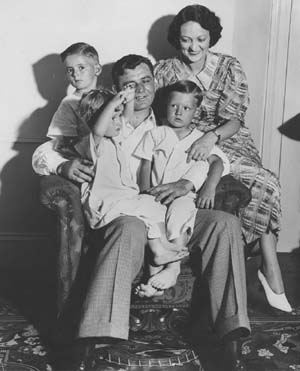
1. Three kids together
2. Mae worries about Jimmy getting hurt in the fights
II.Great Depression
A. Family loses everything
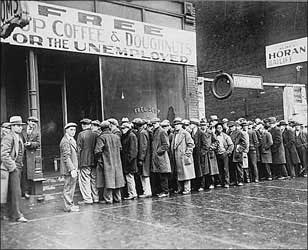
1. Jimmy loses all of his money in the stock market
2. Jimmy looks for shifts at the dock to make some money

3. Mortgage is overdue
4. Electric and heat get turned off

5. Not enough food
B. James broke his wrist in a fight
1. Got his boxing license suspended
2. Money is tighter
3.Asks for money from Emergency Relief
4. Asks for money from big executives at Madison Square Garden
III. James is back in the ring
A. James' manager, Joe, gets him a fight at Madison Square Garden now that his hand is healed
1. Corn Griffin vs. James J. Braddock, Braddock wins
2. John Henry Lewis vs. James J. Braddock, Braddock wins
3. Art Lasky vs. James J. Braddock, Braddock wins
B. Mae worries about Jimmy getting hurt in the fights.
1. Her explanation is that if Jimmy gets hurt, he won't be able to work, and they won't have money.
IV. The Big Fight
A. Jimmy, the underdog
1. Jimmy pays back the money he received from Emergency Relief
2. A sports reporter calls Jimmy the "Cinderella Man" (rags to riches story)
B. Max says to Mae that Jimmy might not make it out of the fight alive.
1. She doesn't watch the fight in person or listen to it one the radio because she fears for Jimmy's life.
2. Baer was said to have killed two men while boxing.
C. June 13, 1935
1. Braddock wins against Baer and becomes the Heavyweight Champion of the World.
V. Afterwards
A. Life After Boxing
1. Jimmy works in construction of the Verrazano Bridge and owned and worked with heavy machinery on the docks where he worked shifts during the Great Depression.
2. Mae and Jimmy use the money from the fights to buy the house that they lived in for the rest of their days.
Monday, February 14, 2011
Wednesday, February 9, 2011
Topic 7 Concept Guide
The Scopes Trial: John Scopes, a teacher in Tennessee, was arrested and put on trial for teaching evolution in schools. Tennessee was heavily Protestant and KKK. It was on of the biggest cases of the 1920s. It was a fight between religion and science.
Prohibition: the ban of the manufacture and sale of alcohol, didn't include the banning of possession, consumption, or transportation of alcohol. 18th amendment banned the manufacture and sale of alcohol. The IRS was in charge of enforcing prohibition, though it wasn't enforced very well. Prohibition caused more bars, drinking, and crime.
Flappers: women in the 1920s that had short hair, wore lots of makeup, smoked, drank, wore shorter dresses showing their calves. Women were more liberated in the 1920s and presented themselves in that way by the way they dressed and acted.
Economic Issues (1920s): people bought on credit, using money they didn't have, thinking that they would pay it back later; low interest rates encouraged people to borrow money, installment plans were introduced: people could pay off something a little bit each month, people had discretionary income: money left over to pay nonessentials, people speculated the trends of the stock market.
Dust Bowl: farmers farmed the land too much, didn't allow the soil to recover. The soil becomes infertile. Dust blows as far as the East Coast and covers houses and cars. Farmers were broke because they didn't have fertile land to grow their crops on.Causes of Dust Bowl: drought, over farming, mechanization
Agricultural Issues: the Dust Bowl affected the amount of crops that were able to be grown in the United States. Upton Sinclair wrote "The Jungle", which discussed the truth about the meat packing plants in the U.S.
Immigration Policies: World War I limited immigration to the U.S. The U.S. thought they could thrived without immigrants and the quota system began. Ethnic groups were limited to 2% of the count from the 1890 census. Asians were not allowed into the country at all.
Nativism: when a country favors its native people instead of its immigrants. After WWI, immigration was limited in the U.S. The United States thought they could thrive without immigrants.
Significant Literary Works (1920s): Jacob A. Ris wrote "How The Other Half Lives", a photo-essay about the large difference in social class in New York City. Upton Sinclair wrote "The Jungle". He went undercover in the meat packing industry to expose the truth of what was going in packaged meat. Langston Hughes wrote "The Ways of White Folks". It was with this book that Whites were first called out for the unjust treatment of Blacks.
The Great Migration: a huge population in shift in which African Americans moved from the South to the North.
Harlem Renaissance: a celebration of African American culture through art, music, and literature during the 1920s in New York City.
Sacco and Vanzetti: Italian immigrant anarchists that were charged with murder and robbery.
Labor Issues (1920s): The Railway Labor Act was passed, which made it illegal for employers to discriminate employees that joined unions. The violent Loray Mill Strike was when masked men destroyed the National Textile Workers Union building. The Child Labor Amendment was proposed, but it didn't become an amendment to the Constitution. Protesting coal miners were killed in the Columbine mine massacre.
The Red Scare: The U.S. became afraid of anything non-American, particularly foreigners. During the Palmer raids, people were jailed if they were thought to be communist or anarchist.
Schneck v. the United States: the Espionage and Sedition Acts were declared constitutional by the Supreme Court.
Monday, February 7, 2011
Small Group Presentations
During the small group presentations about the gangsters of the 1920s and organized crime, I learned that "Pretty Boy" Floyd's nickname was "Choc". He got that nickname because of all the chocolate he liked. Both "Pretty Boy" Floyd and "Babyface" Nelson worked with John Dillenger. Kate "Ma" Barker waited until her sons graduated high school before she began her life of crime. She wouldn't let her sons have law-abiding friends. "Babyface" Nelson was arrested at age 12. He joined John Dillenger's gang and worked with Al Capone. People made fun of "Babyface" because of his height and because he had a baby face. "Machine Gun" Kelly abused his son, Sonny, and met Al Capone at Alcatraz.
Tuesday, February 1, 2011
Acrostic Poem
Parties were more sobering
Rose wine wasn't allowed
Over time, federal police powers increased
Hobs and barley were being used to make homemade beer
Intentions to get around the police were more common
Beer wasn't part of the party
It wasn't long before the 18th amendment was repealed
Tequila wasn't flowing
In general, alcohol was illegal
On the contrary, people still drank
No one was allowed to drink
Red Scare made everyone paranoid
Old Americans didn't like the new ways
Applesauce, the word of choice
Result of the stock market crash was the Great Depression
Immigration restrictions became tighter
No one should mess with Al Capone
Gangsters and mobs ruled the streets
The radio as the king of entertainment
When the stock market crashed, everyone was broke
Engagement rings were known as handcuffs
Neat and spiffy the guys dressed
The boss was known as the Big Cheese
It was a time of parties and liberation
Everyone bought on credit
Shorter skirts were worn by the girls
Monday, January 31, 2011
Creationism vs. Evolutionism
I have been asked this question before in another class. My personal belief, in a perfect world, would be to teach creationism in schools. Though I know this doesn't fly with many people, I think it would be best to explain both sides of the spectrum. By teaching both creationism and evolutionism, no one is left out. The students will be able to choose whatever they want to believe. In most major religions, creation, life, and Earth start with an all-powerful being, God. The teacher should also state that students aren't being forced to except one theory or belief over another. The teacher should probably not try to push his or her own religion onto the students, but if a student has a question that the teacher knows, the teacher should be allowed to answer the question with complete sincerity.
Friday, January 28, 2011
Sacco and Vanzetti
It is very difficult to know that someone’s fate, sometimes whether the person lives or dies, is in your hands. If you’re not convincing enough to get the jury to see your side, the defendant may have his or her life change forever. In the Sacco-Vanzetti case, death was on the table. These men were Italian anarchists that were charged with robbery and murder. They were executed by electric chair, a terribly painful death. The jury believed them to be guilty of the crimes and think so too.
 To begin with, the ballistics test conducted at the Massachusetts Police Lab shows that the bullet couldn’t have come from Sacco’s gun. Despite what others have said about the type of gun, the ballistics test was probably the most advanced type of forensics the police had at the time. Vanzetti was unsure of where he bought his gun and the bullets. Vanzetti had a strange reason for not telling where he bought the gun. He said it was because he paid in cash and because of the hold-ups around that time. Vanzetti didn’t explain why he lied about where he got the gun.
In addition, Sacco didn’t go to work on the day of the crime. Sacco said that he went to apply for a passport and he was then seen at Boni’s Restaurant by seven eye witnesses. Sacco could have committed the crime and then have gone to the restaurant to make this day look more normal to cover himself in case anyone suspected him of something. Sacco at first didn’t say he was in Boston. An eye witness that agreed that Sacco was at the restaurant said that he was called to be a juror for Sacco’s trial by a Boston anarchist club. The witness probably did this out of fear for what the anarchist group could do to him or his family.
Furthermore, the many lies told during this trial show the criminals’ consciousness of guilt. Sacco lied about where he was on the day of the crime, why he had a gun with him on the crime date, and his anarchist convictions. His anarchist views were very obvious when he would write for the Cronaca Sovversiva,an anarchist newspaper. He even moved to Mexico to avoid being drafted for World War I during 1917. Sacco also attended anarchist meetings regularly. He claimed that he lied about his anarchists views because he thought he would be deported back to Italy. Vanzetti also lied about his guns and where his friends were. He made up these lies because he feared what was going on with the Red Scare and he feared deportation. The safety of his anarchists friends was also a concern for him.
I believe that the jury was correct in finding Sacco and Vanzetti guilty. The bullet matched the gun that it came from. They were anarchists and committed the crimes even though they said they didn’t. In the end, Sacco and Vanzetti were executed after seven years of waiting for their sentence.
Image Source: http://www.law.umkc.edu/faculty/projects/ftrials/SaccoV/SACCO&V.jpg
Image Source: http://www.law.umkc.edu/faculty/projects/ftrials/SaccoV/SACCO&V.jpg
Friday, January 7, 2011
20's Lingo
(Male talking) "Hey, your gams are the cat's meow." I see this bearcat walk the same route to the subway everyday. Last week, she told me the bank's closed, but I kept persisting. Yesterday, I saw her at a restaurant and told her I'd buy her some hooch. This bearcat looked like she loved to have some giggle water. My friend owns the restaurant and keeps some of his homemade liquor in the back. My friend gyped me when he saw it was for a girl. It's not like I could say no in front of her. I talked with the girl until the restaurant closed. Then, we had some more drinks with my friend. All of a sudden, the cops busted through the front door with loaded guns and handcuffs. One cop looked at my girl like if she was my friend's moll. I bet someone that works at the restaurant told the police about my friend in exchange for some cash. My friend got pinched and I'm going to have to find a way to get him out. The girl said that I looked spiffy and that she had a good time, except for my friend getting arrested. Before the night was over she let my have a taste of her kisser. It was an exciting night to say the least.
Subscribe to:
Posts (Atom)